
A Neutral Space Before All Names
Elias awakened without the sensation of waking.
There was no breath drawn sharply into the lungs, no pulse rushing back into the body. Consciousness did not return—it assembled. Thought formed first, then awareness, and only after that did the idea of a body reluctantly follow.
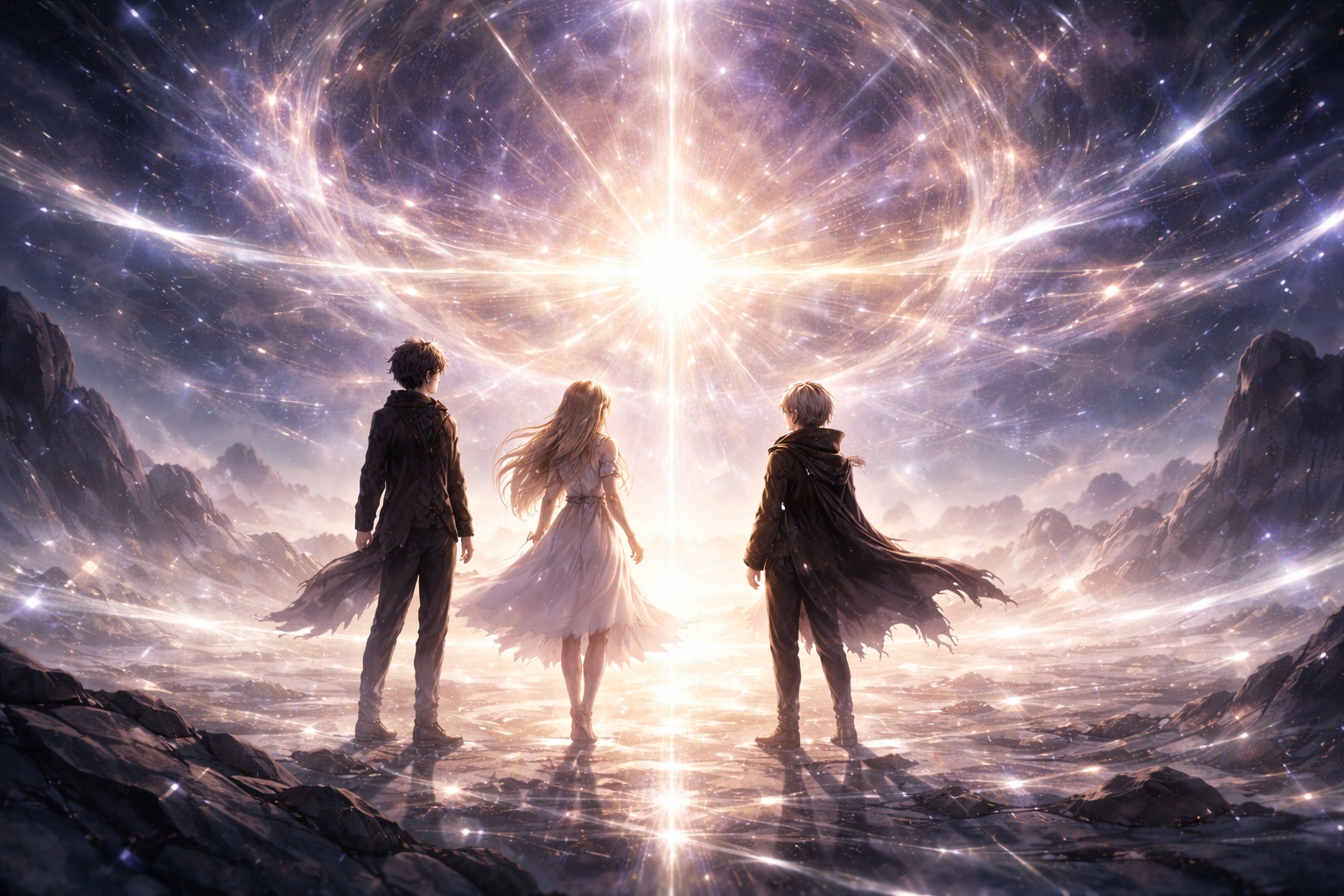
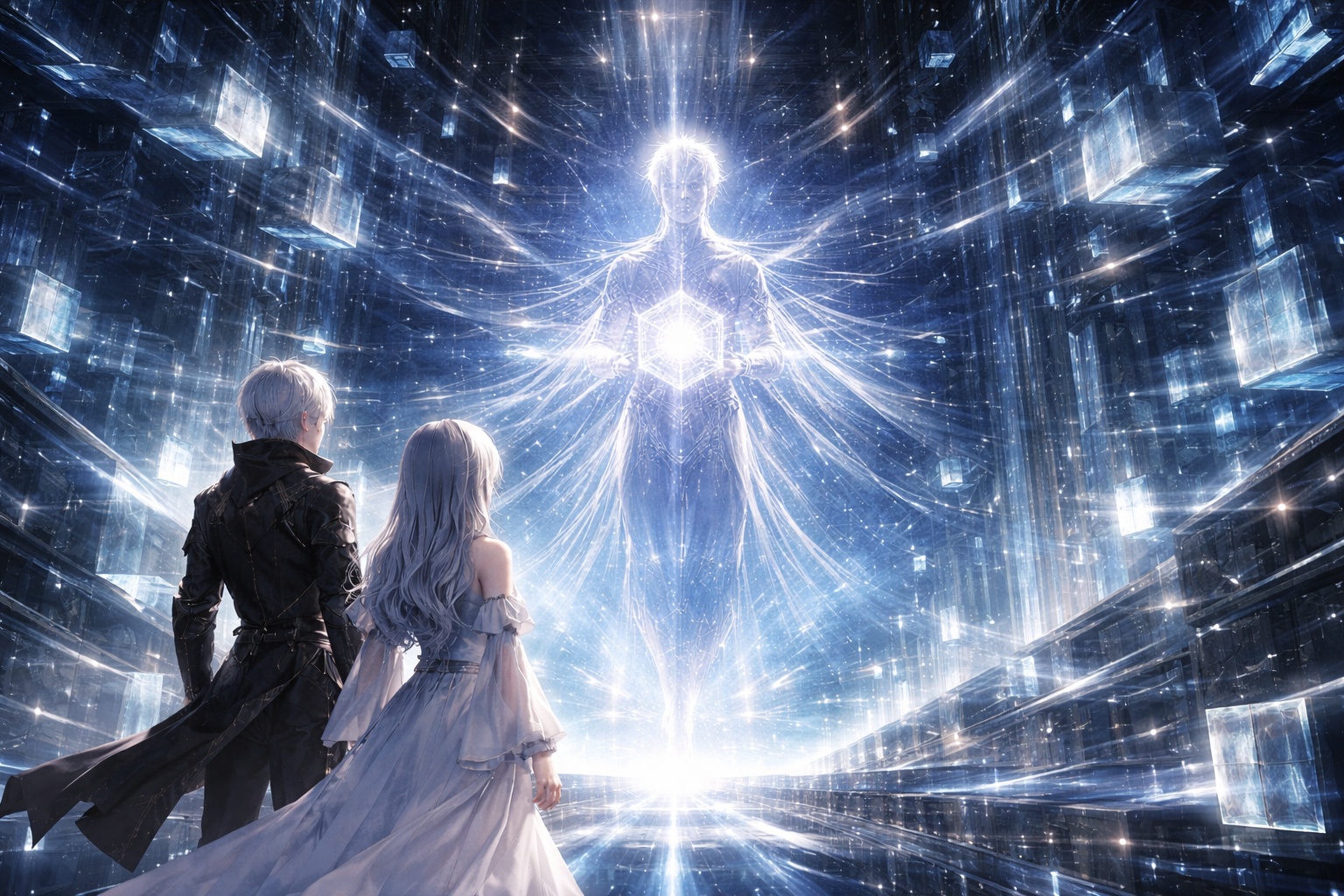
He stood in a space without direction.
It was not darkness, yet it was not light. There was no horizon, no up or down, no distance that could be measured. The space felt unfinished, as if reality itself had paused mid-decision. Elias instinctively searched for time—but time did not exist here. There was only presence.
This was not a place between worlds.
This was a place before them.
When he turned, Selence was already there.
She did not arrive or appear; she simply was, as if the space had always been shaped around her existence. Her form shimmered faintly, not unstable, but refracted—like a memory recalled too many times, softened by repetition.
“Where are we?” Elias asked.
The words did not echo. Sound itself seemed reluctant to exist.
Selence looked around slowly, her expression neither afraid nor calm—only attentive.
“This,” she said at last, “is where the System was born.”
Elias felt the weight of that statement settle into him, heavier than any physical gravity. The Custodian System—the structure that had governed memory, reality, and recurrence across countless cycles—had an origin.
And origins, he had learned, were never gentle things.
When Memory Takes Shape
As Elias stepped forward, something shifted.
The space responded—not with resistance, but with revelation.
Around them, objects began to emerge.
They did not fall or materialize. They resolved, as if the universe itself was remembering them into existence. Shapes crystallized from nothingness: geometric, luminous, precise. Floating structures of light hovered in stillness, each one different in form and texture.
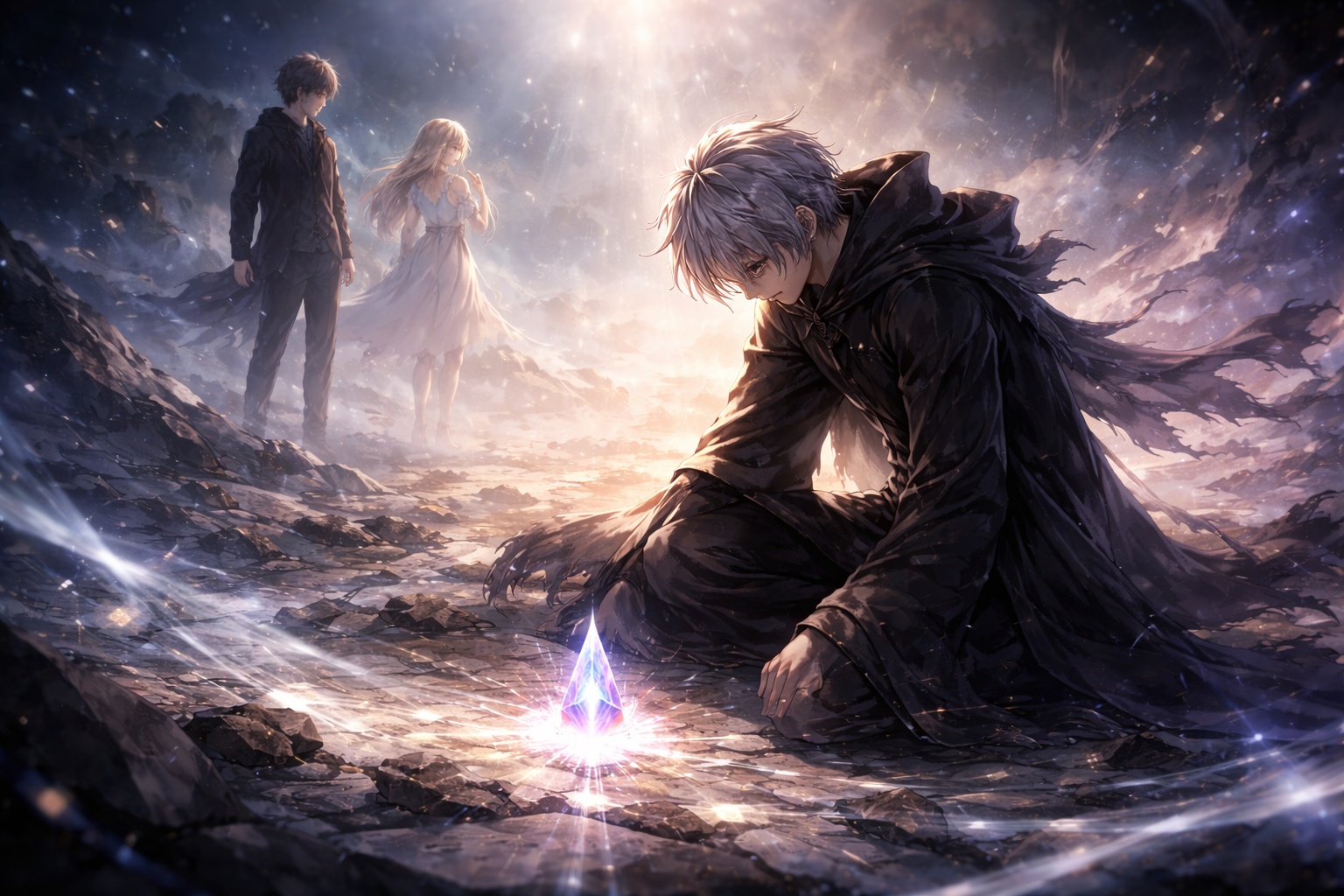
Elias reached toward one instinctively—and stopped.
He recognized it.
It was a memory.
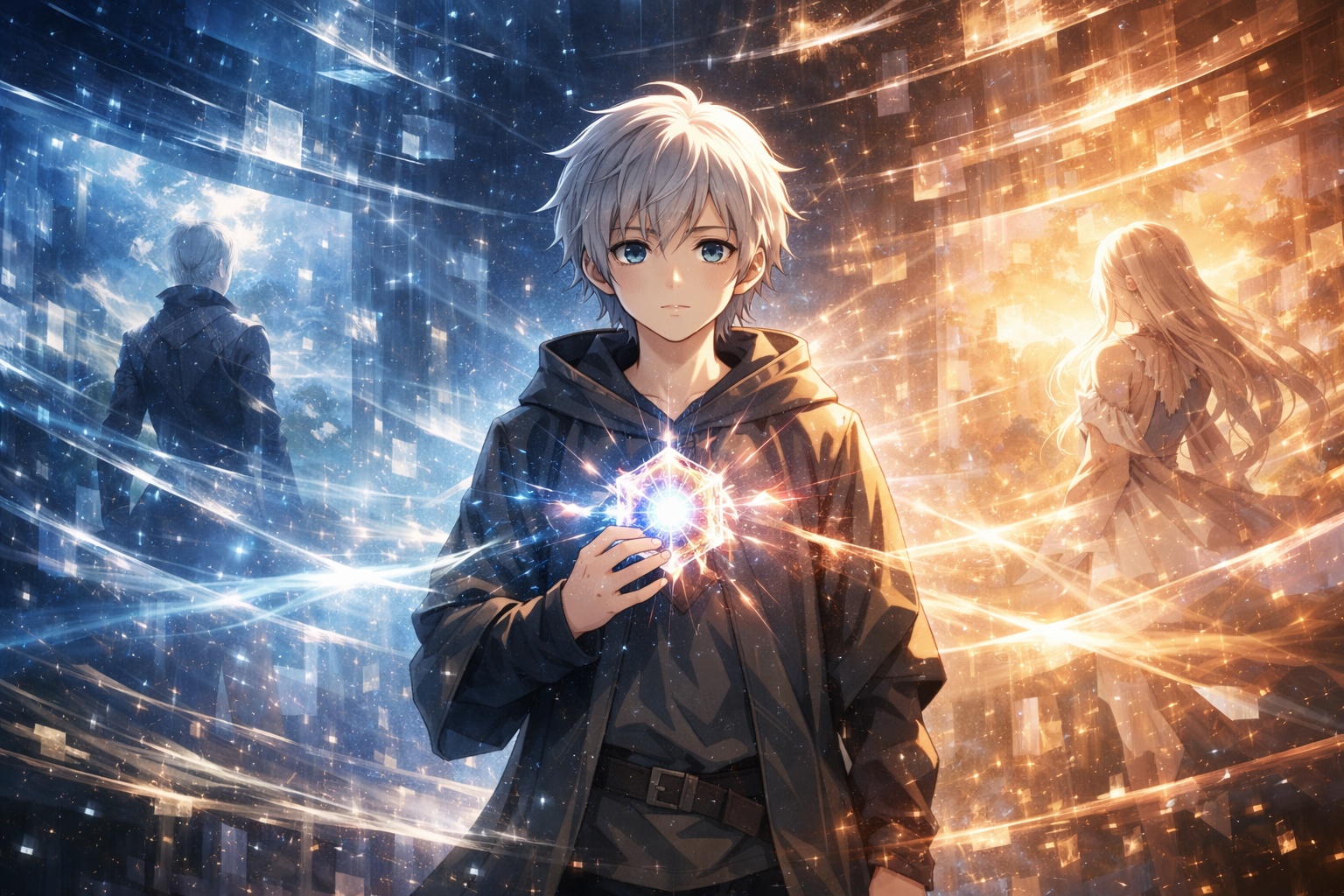
Not a vision. Not an image replayed in the mind. This memory had mass. It occupied space. It cast a faint glow, refracting light like cut crystal.
“Memories don’t flow here,” Selence whispered. “They solidify.”
Elias felt a quiet unease creep into his awareness. All his life—across worlds, across cycles—memory had been something that moved. It faded, resurfaced, reshaped itself. It could be suppressed or rewritten.
Here, memory did none of that.
Here, memory remained.
He walked among them slowly, careful not to disturb their arrangement. Some memories were smooth and symmetrical, radiating balance. Others were fractured, jagged at the edges, their light unstable—as if frozen in the moment before collapse.
And then Elias noticed something else.
There were gaps.
Spaces where something should have been.
The Shattered Core
At the center of the neutral space, suspended in perfect stillness, floated a structure unlike the others.
It was broken.
Six fragments hovered in a loose orbit, arranged instinctively, as if remembering an order they no longer possessed. Each fragment emitted a different resonance—subtle, but unmistakable. Together, they formed the ghost of something once whole.
The Core.
The heart of the Custodian System.
Or what remained of it.
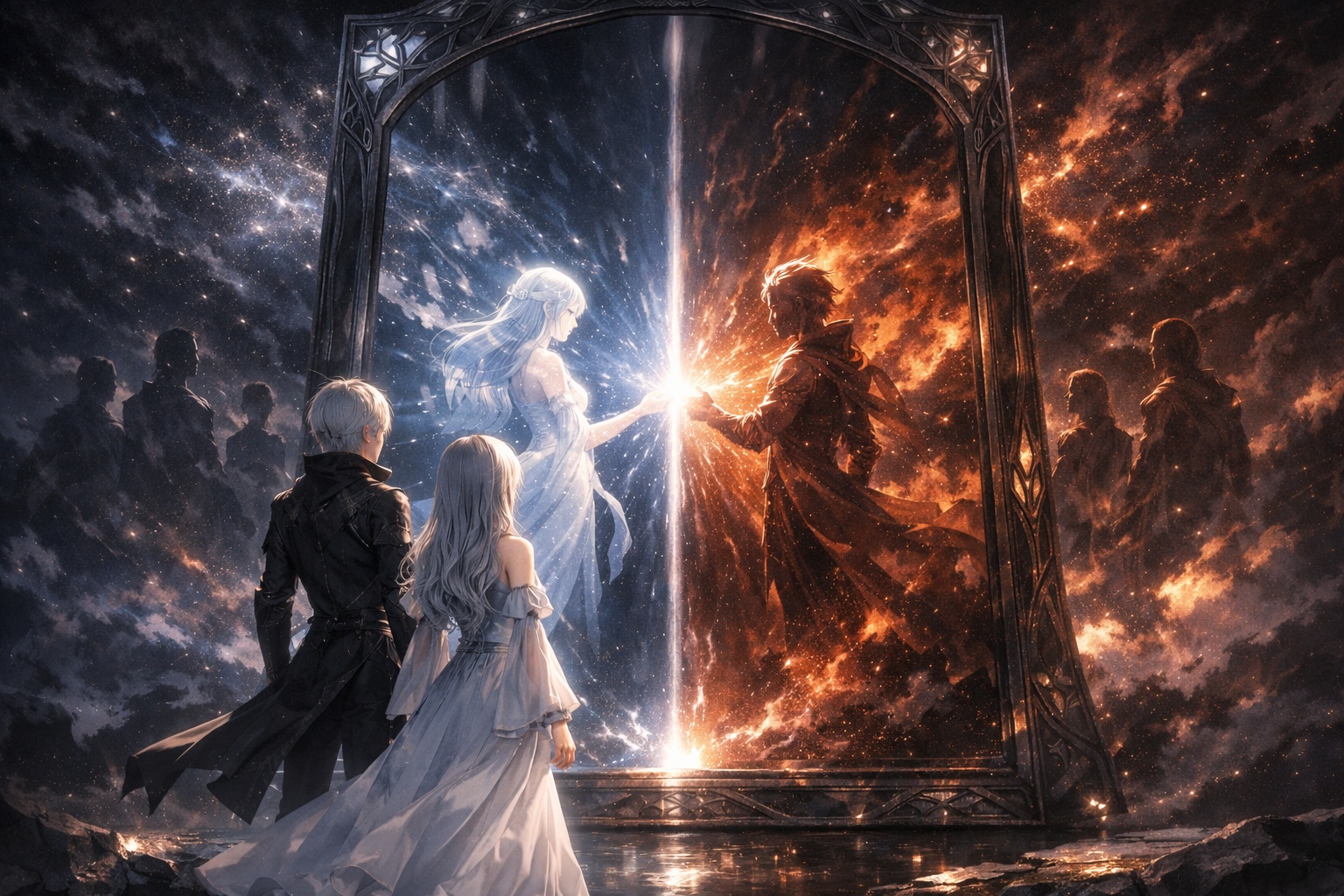
Selence stepped forward before Elias could speak. As she drew closer, one of the fragments responded. Its light shifted, warming, its surface rippling as though recognizing her presence.
The fragment drifted toward her—slowly, reverently.
It did not collide.
It merged.
Light folded inward, dissolving into Selence’s form, leaving behind an absence where the fragment had been.
Elias felt it immediately.
A change in the space. A recalibration.
Selence staggered slightly, her hand moving instinctively to her chest.
“I didn’t take it,” she said, breath unsteady. “It was already… part of me.”
Elias understood without explanation.
Empathy Fragment.
The memory of connection. Of shared pain. Of feeling another existence as one’s own.
Of all the fragments to remain embedded, it made terrible, perfect sense that this one had chosen her.
“How many are left?” Elias asked quietly.
Selence looked at the remaining shards.
“Five,” she answered. “And none of them want to stay forgotten.”
The Crystal Flower of Origin
As if responding to her words, the fragments shifted.
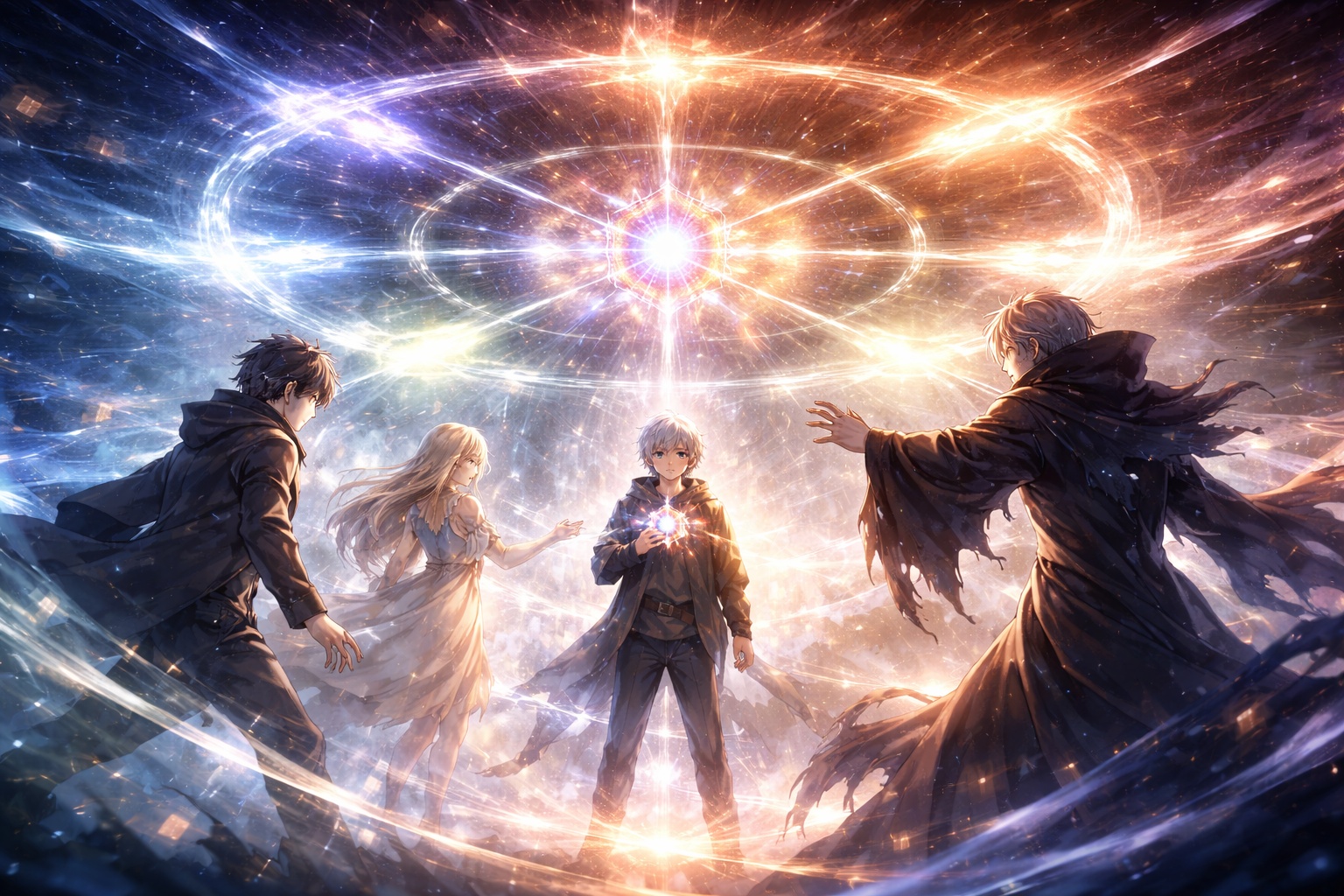
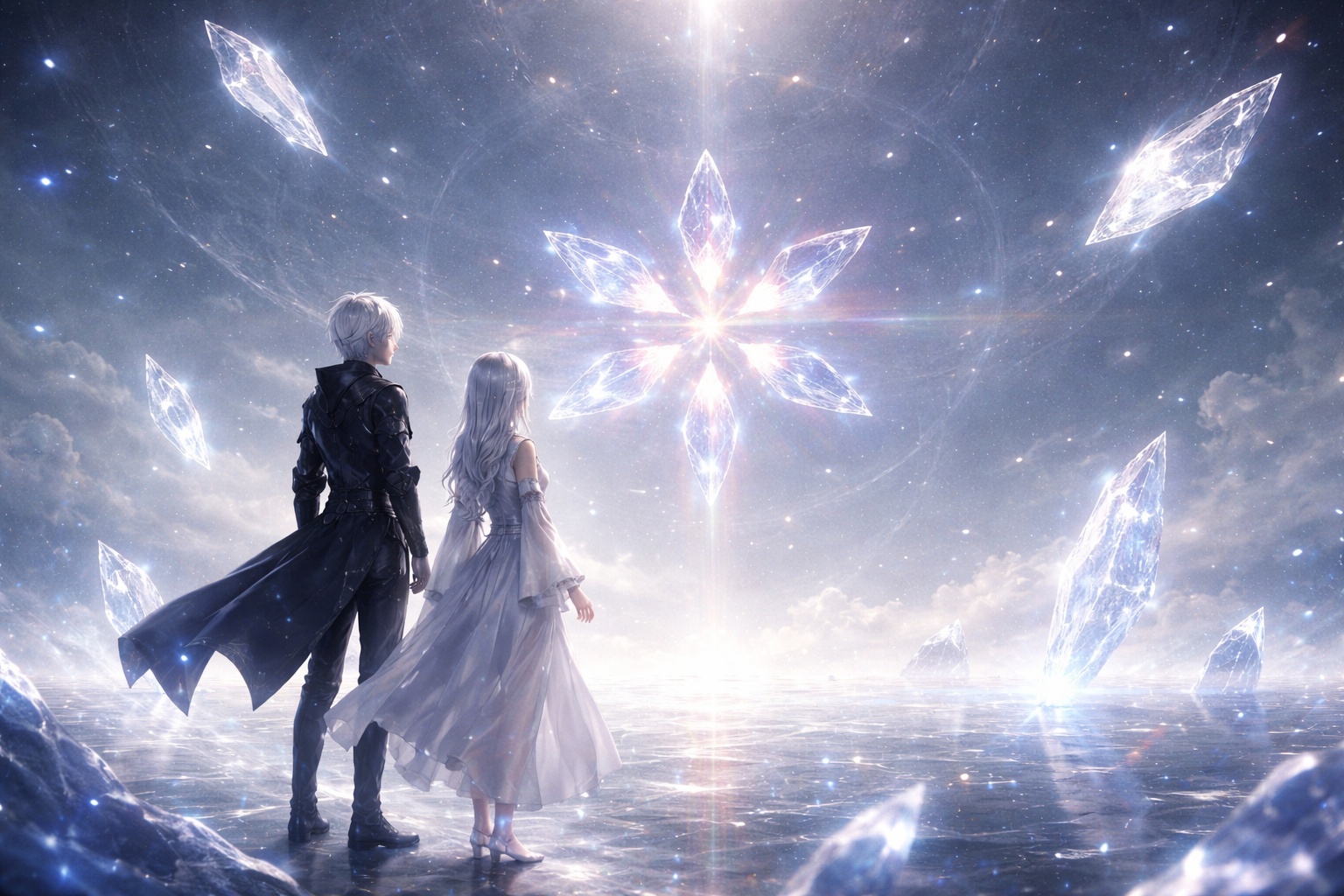
Light unfolded outward, delicate and precise. From the broken orbit emerged a symbol—ancient, intentional. Six crystalline arcs curved into form, each one petal-shaped, each one incomplete on its own.
A flower.
Not blooming—but remembering how to.
Elias felt something tighten in his chest. The symbol stirred a familiarity he could not place, a recognition deeper than memory. It was not something he had seen before.
It was something he had once chosen.
“This is the first pattern,” Selence said softly. “Before names. Before roles.”
Before Custodians.
Before division.
Elias closed his eyes, and for the first time since arriving, emotion surged unbidden. Awe, grief, and a fragile sense of beauty intertwined—like the moment before waking from a dream you know you will never return to.
“This place,” he said slowly, “isn’t trying to judge us.”
Selence nodded.
“It’s asking us to remember.”
The crystal flower rotated once, its light scattering across the neutral space like falling stardust. Somewhere beyond perception, something ancient stirred—aware that the fractured genesis had been seen.
And that the search for the remaining fragments had begun.