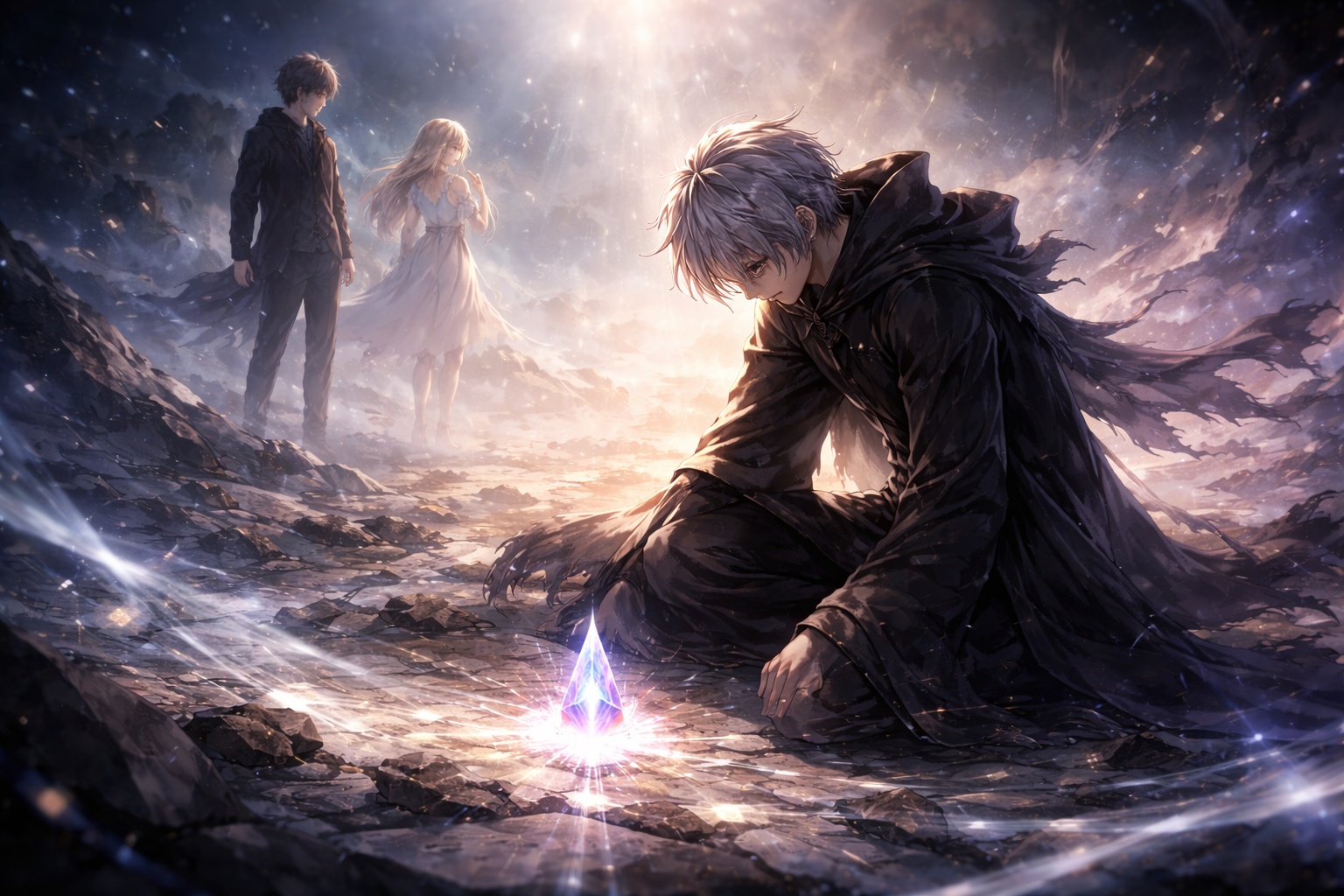

When Silence Is No Longer Control
The light receded slowly.
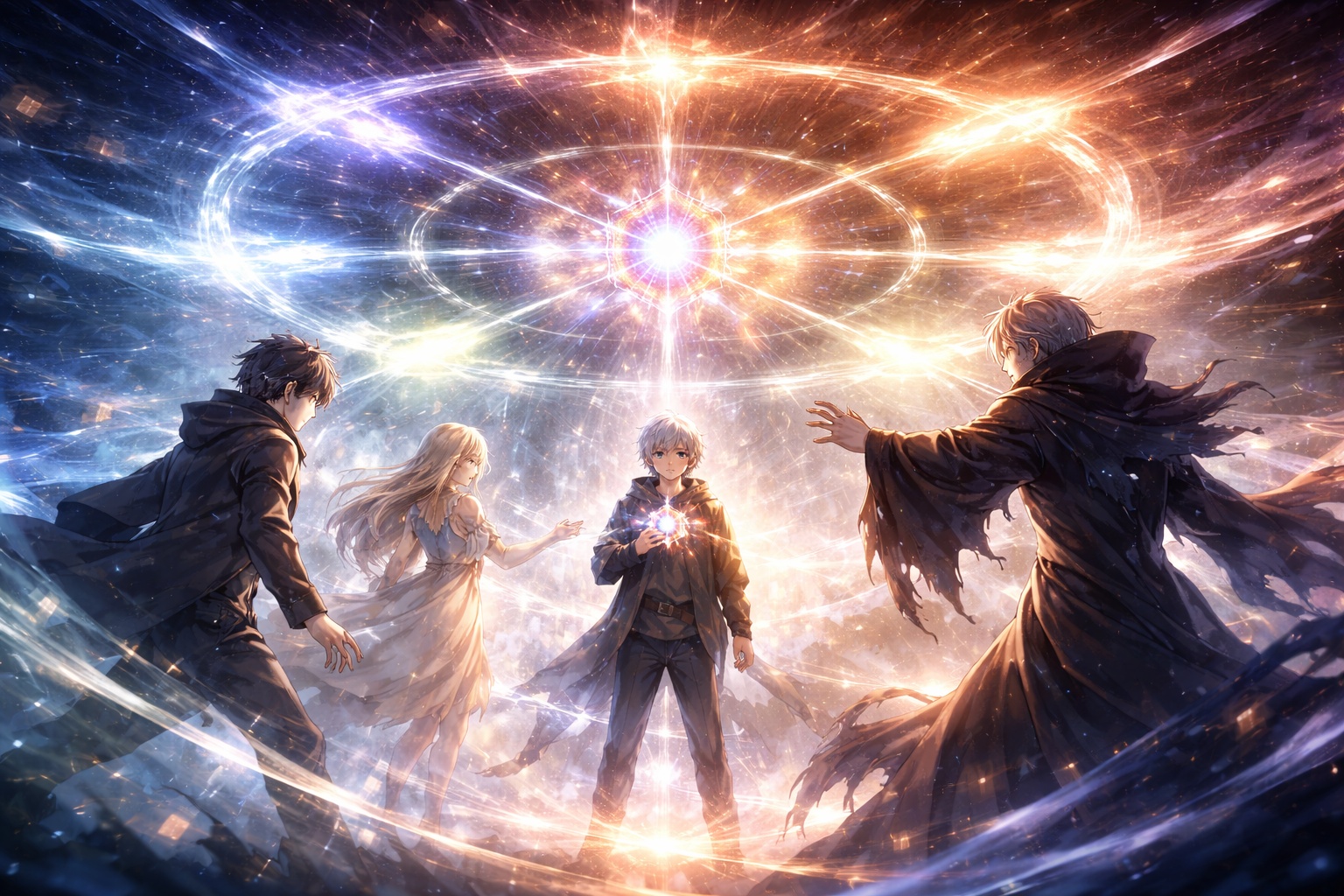
Not as an explosion, not as a collapse—but as a release. The space that had once been bound by the Custodian System loosened its grip, allowing distance, direction, and uncertainty to return. The sixfold convergence faded into a steady rhythm, like a heart that had learned how to beat on its own.
Kaelis lay at the center of it all.
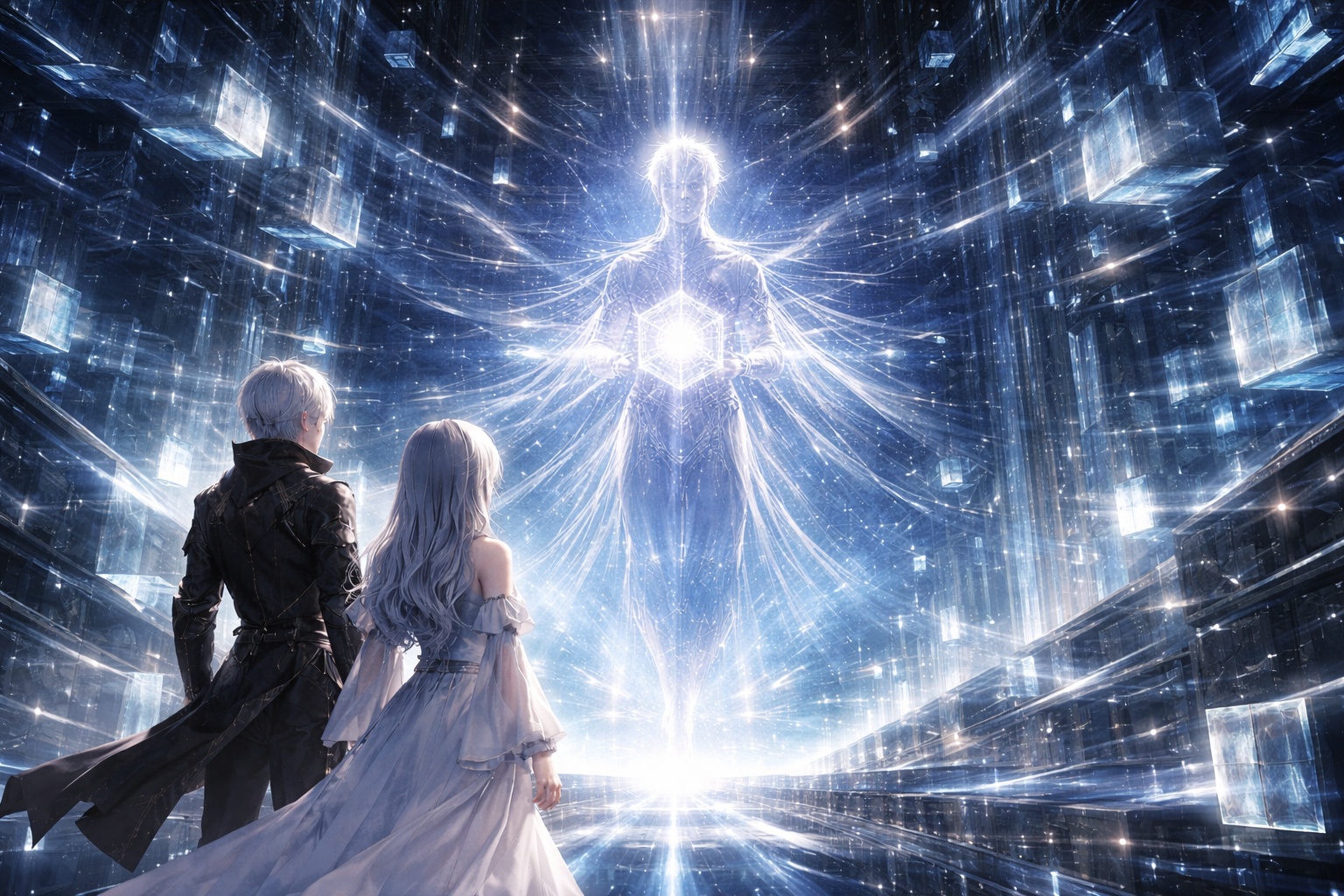
His form no longer held the rigid symmetry it once possessed. The sharp geometry that had defined him softened, dissolving into uneven contours. He looked smaller—not diminished, but exposed. For the first time since Elias had known him, Kaelis appeared unfinished.
Alive.
Elias approached cautiously, the echoes of reunited fragments still humming beneath his awareness. Selence remained a step behind, her presence calm but attentive.
Kaelis opened his eyes.
They were no longer reflective.
They were human.
The Custodian Without a Function
“I can feel it,” Kaelis said quietly. “The System is gone.”
His voice held no accusation. No bitterness. Only observation.
“You’re no longer bound to it,” Elias replied.
Kaelis smiled faintly—a gesture that seemed unfamiliar to his own face. “Neither are you.”
He struggled to sit up, then stopped, as if realizing something fundamental had changed. The certainty that once governed his every motion was gone. In its place was hesitation.
Choice.
“I spent entire cycles believing that pain was a defect,” Kaelis continued. “Something to be isolated. Contained. Removed.”
Selence knelt beside him. “And now?”
Kaelis looked at her, truly looking, as though seeing her without filters for the first time.
“And now I feel it,” he said. “Not as a variable. Not as noise.”
He pressed a hand against his chest.
“As weight.”
The Regret Fragment
Something stirred within him.
A dim light surfaced beneath Kaelis’s form—subtle, unassuming, yet unmistakable. It did not radiate outward like the other fragments had. It folded inward, condensing into a small, fractured core.
The Regret Fragment.
Elias felt its resonance immediately. It was not the absence of memory—but the memory of having chosen wrongly, fully aware of the cost.
Kaelis watched it emerge with quiet acceptance.
“This was always the fragment I carried,” he said. “Even before it had a name.”
Rhelon stepped closer, eyes wide—not in fear, but recognition. “It hurts,” he said softly.
Kaelis nodded. “Yes.”
He reached toward the fragment, then stopped, letting it hover freely.
“I believed regret was proof of failure,” he continued. “But now I understand—it is proof that the choice mattered.”
The fragment pulsed once, as if acknowledging its own existence.
A Truth Spoken Too Late
Kaelis turned his gaze to Elias.
“You were right to break the System,” he said. “Not because it was flawed—but because it was afraid.”
Elias felt the words settle deeply. “You tried to save reality.”
“I tried to freeze it,” Kaelis replied. “So it would never surprise me again.”
Silence followed—not imposed, but shared.
Kaelis exhaled slowly.
“If memory is pain,” he said at last, “then perhaps pain is what reminds us we lived.”
The words echoed softly through the open space, no longer bound by algorithms or control.
Selence closed her eyes.
For the first time, Kaelis did not look away.
The Fall That Is Not a Failure
The Regret Fragment began to fracture—not violently, but gently, as though releasing itself from form. Light scattered into faint motes that drifted outward, dissolving into the surrounding reality.
Kaelis watched them fade.
“I won’t persist much longer,” he said calmly. “Without the System, my existence has no anchor.”
Rhelon stepped forward. “You could stay,” he said. “As memory.”
Kaelis smiled again—this time without restraint.
“That would defeat the lesson,” he replied. “Memory must move on. Even from me.”
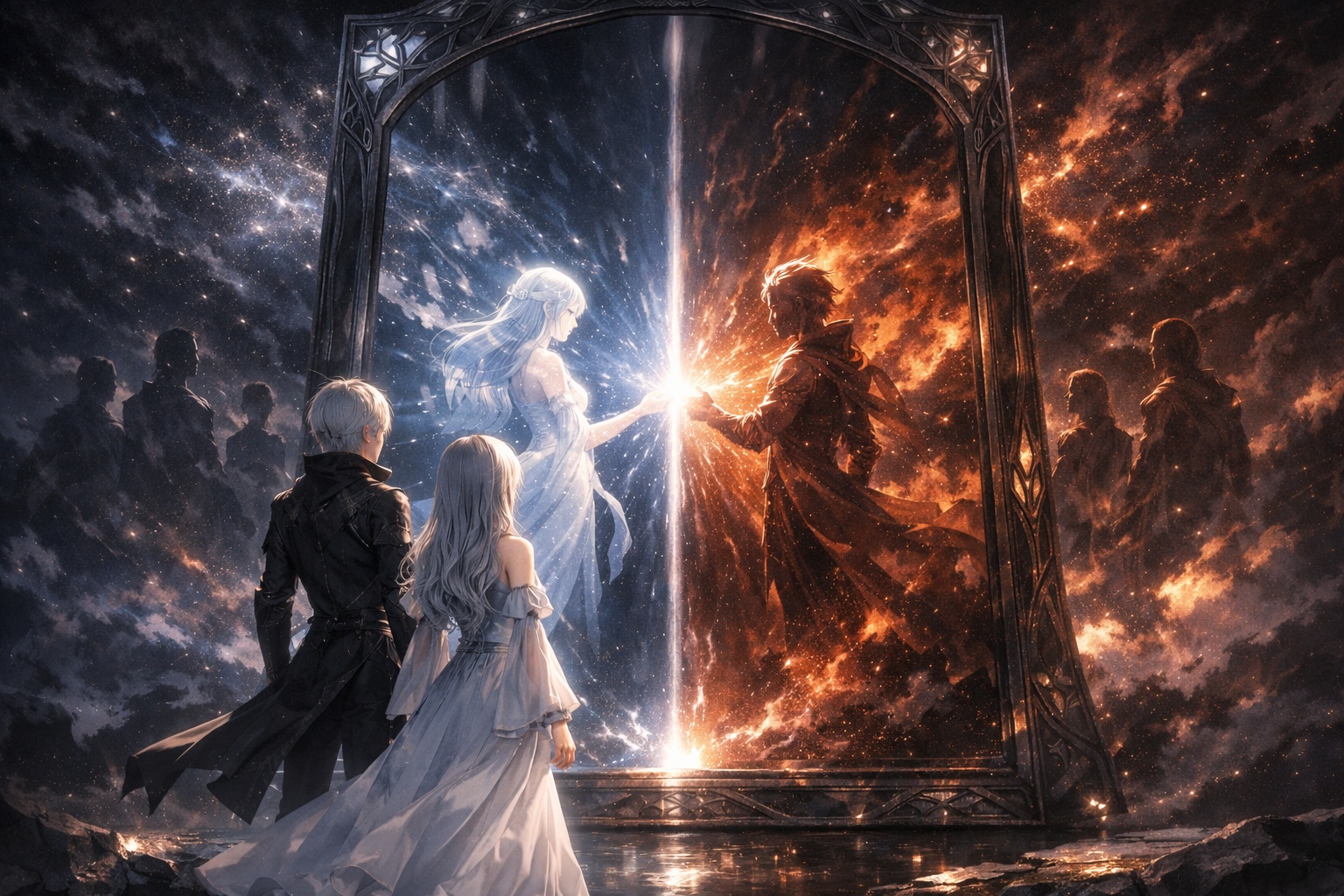
He turned to Elias and Selence.
“Do not build another system,” he said. “No matter how broken the future becomes.”
Elias nodded. “We won’t.”
Kaelis’s form began to thin, edges blurring into the ambient light. But there was no panic. No resistance.
Only release.
What Remains After Control
As Kaelis faded, Elias felt something unexpected.
Gratitude.
Not for the harm Kaelis had caused—but for the truth he had finally spoken.
When the last trace of Kaelis dissolved, the space did not recoil. It expanded. The universe did not mourn his passing—but it remembered it.
Rhelon stood quietly, absorbing the moment.
“He wasn’t evil,” the boy said.
“No,” Selence replied. “He was afraid.”
Elias looked outward, sensing the new state of reality taking hold—unmonitored, uncontained, alive with contradiction.
“This is what comes next,” he said. “Not order. Not chaos.”
“But responsibility,” Selence finished.
Rhelon nodded slowly.
The fall of Kaelis was not an ending.
It was a release.
And in that release, the universe took its first step toward remembering itself—without guardians, without systems, and without fear of becoming something it could not control.