
Entering a World That Moves Backward
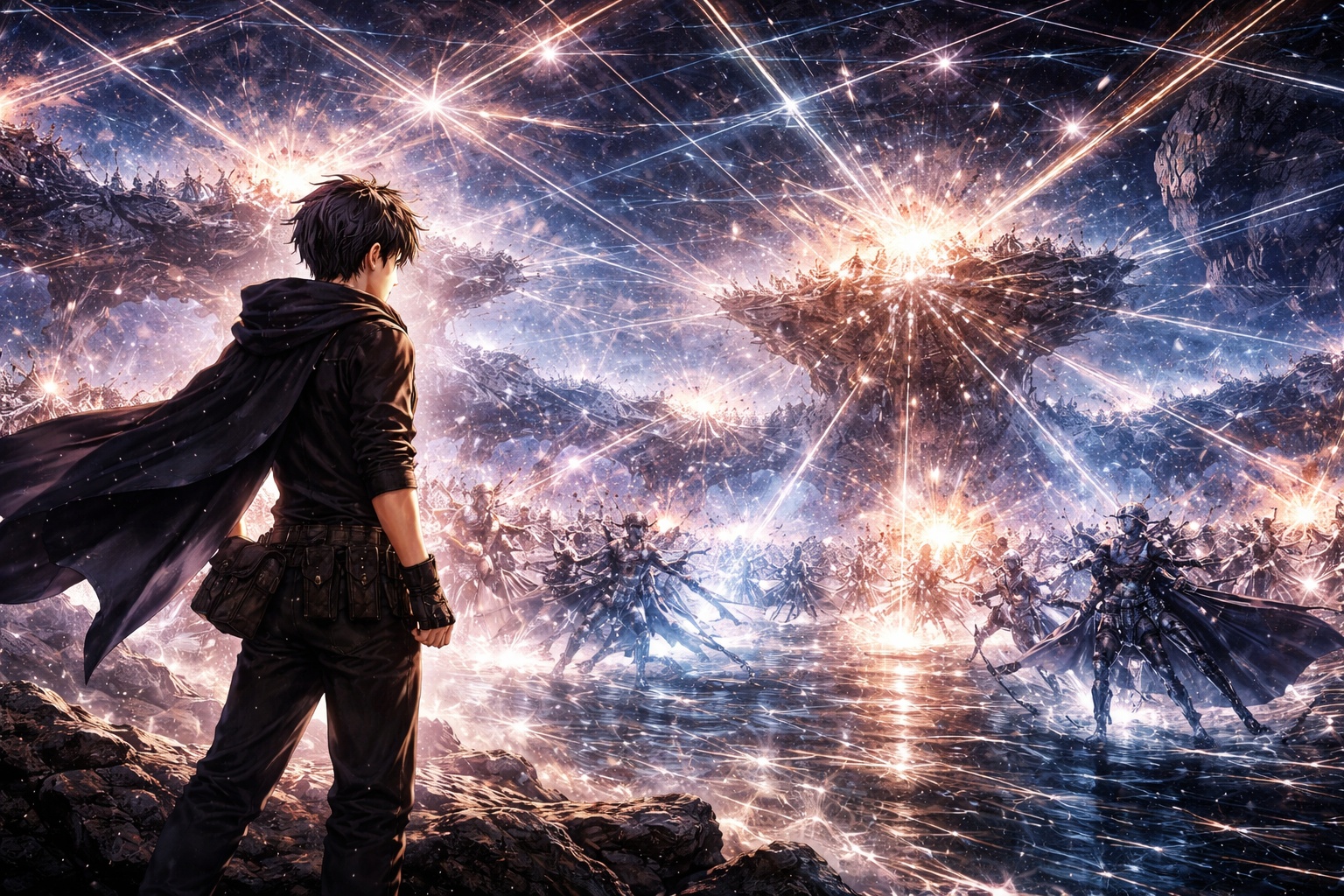
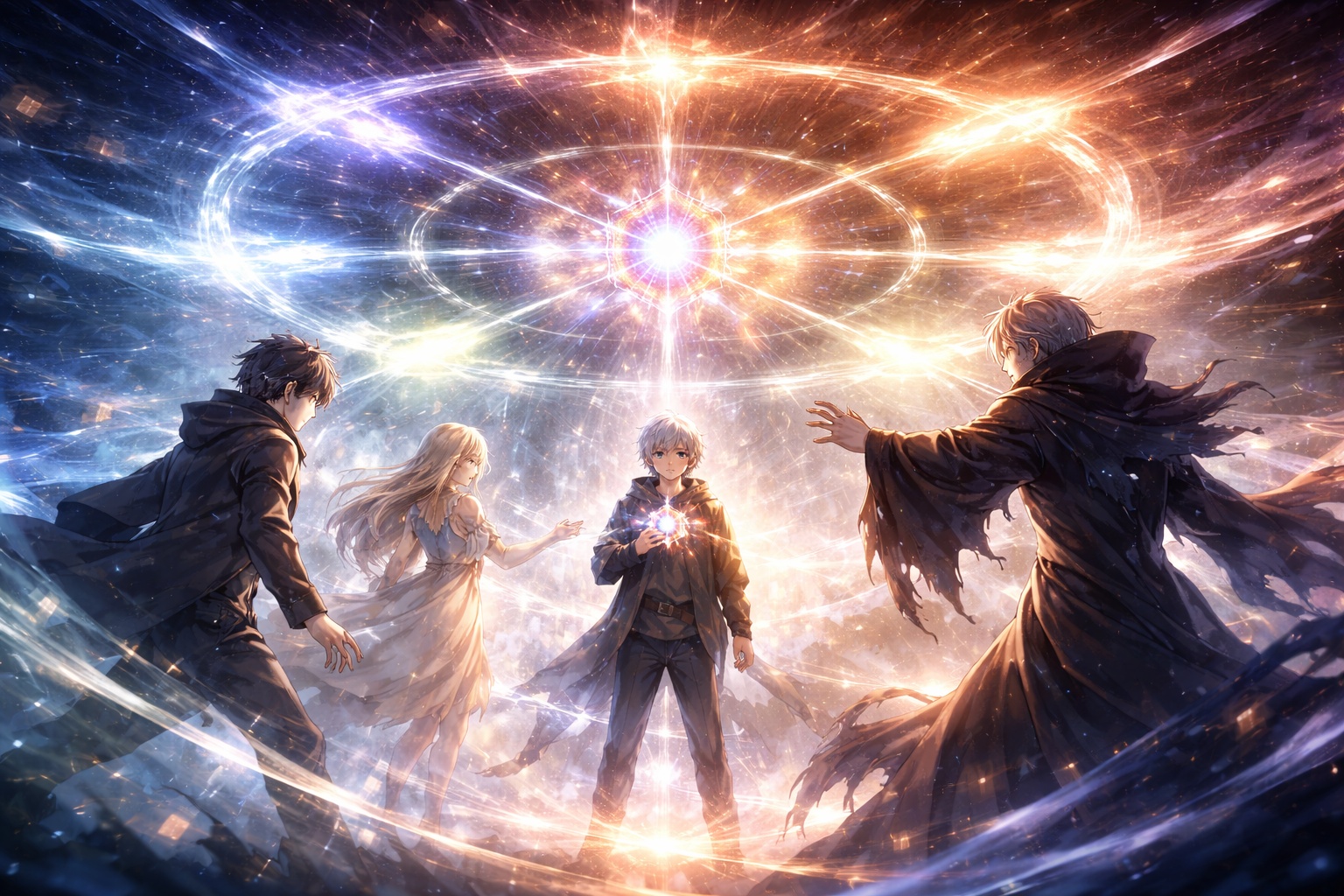
The thread Lyr pointed toward did not descend in any ordinary sense, nor did it fall as light might fall through empty space. Instead, it seemed to unfold, like a hidden layer of reality slowly revealing itself to those who had learned how to see. When Rhelon reached out and touched it, he did not feel texture or temperature—only a subtle resistance, as if he had placed his hand against the flow of something far greater than time itself. Then, without warning, the world fractured. Not violently, but with a quiet inevitability, like a memory slipping backward into its origin. Light folded inward, space twisted, and for a brief, disorienting moment, Rhelon felt himself moving—not forward, not even sideways, but in reverse, as if his existence were being rewound through a sequence of moments he could not fully perceive.
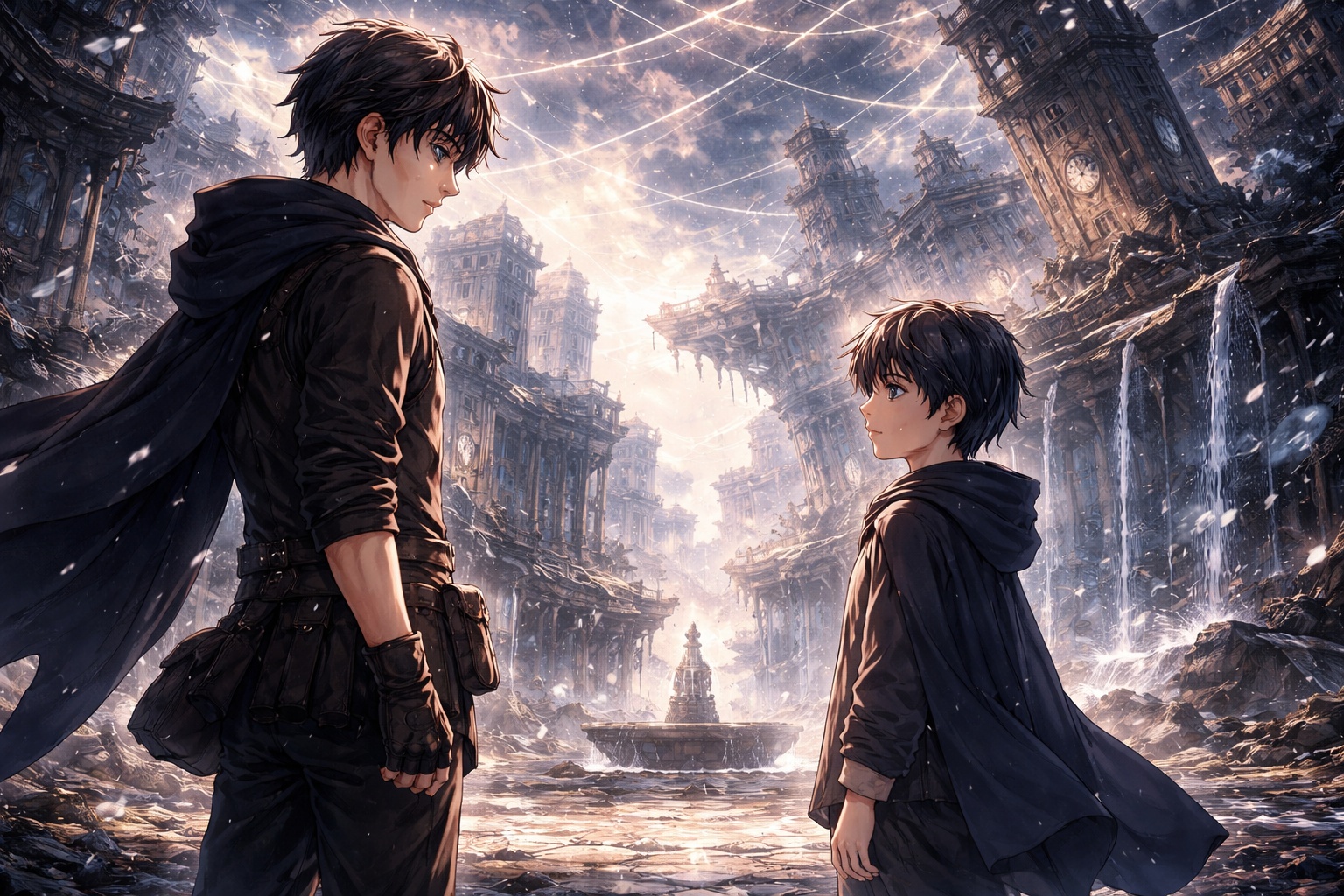
When the sensation ended, he found himself standing in the middle of a city that felt disturbingly familiar in structure yet profoundly alien in nature. At first glance, nothing seemed out of place. The streets were paved with worn stone, the buildings rose with the quiet dignity of something that had endured time, and the sky above was pale and still. But as he took a step forward, something within him resisted—not his body, but his understanding. A shattered window nearby began to reassemble itself, fragments of glass lifting from the ground as though drawn by an invisible memory, each piece returning precisely to where it had once belonged. The cracks vanished, the surface became whole, and the moment reversed itself so completely that it felt less like repair and more like denial.
A City Where Lives Are Remembered in Reverse
Rhelon turned slowly, his perception sharpening as the pattern revealed itself. A man who had lain lifeless on the street moments before was now standing again—but not awakening. His movements were too precise, too predetermined. Blood retreated into the wound that had caused his fall, breath returned not as a beginning but as a reversal, and within seconds he walked backward into a building he had presumably exited in another version of time. It was then that Rhelon understood what made this world so deeply unsettling. These people were not living their lives.
They were remembering them in reverse.
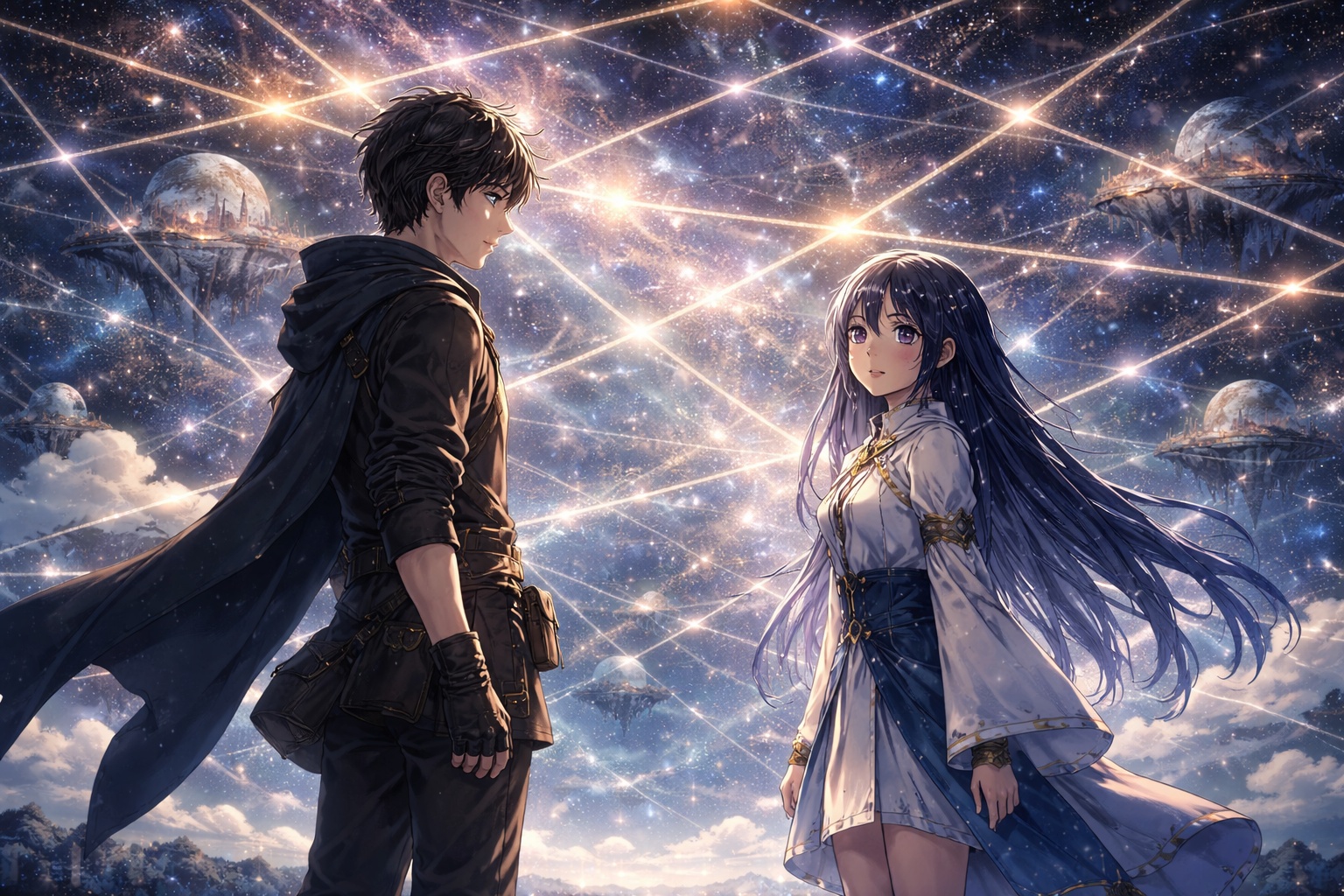
Lyr stood beside him, quiet as always, her gaze reflecting neither shock nor confusion. “In this world,” she said softly, “life begins at the end.” Her voice carried no judgment, only observation, as if she had long accepted the nature of this place. Rhelon did not respond immediately. He watched as a child ran past them, laughter echoing faintly before unraveling into silence. The child slowed, then stepped backward into the arms of a woman whose expression softened, then faded, then disappeared into something that no longer resembled recognition. It was not sadness that struck him—it was absence. A life undone not by loss, but by the quiet erosion of memory.
“They only exist because someone remembers them,” Rhelon said at last, his voice low, almost reluctant. The realization did not come as a revelation, but as something he had always known and only now understood. Above them, one of the threads in the lattice flickered briefly before vanishing entirely. The light dimmed, subtly but unmistakably, and for a moment the entire city seemed to lose a fraction of its presence. Lyr followed his gaze, her expression tightening just enough to betray concern. “It’s happening faster,” she murmured, and Rhelon did not need to ask what she meant. The lattice was not stable. These worlds—these memories—were not meant to exist all at once.
The Encounter with a Forgotten Self
As they moved deeper into the city, the architecture itself began to betray the strain of conflicting realities. Buildings no longer obeyed consistent geometry, their structures twisting as if multiple versions of themselves were trying to occupy the same space. Time did not reverse uniformly here; in some places it flowed more quickly, in others it stuttered, fractured, or repeated. And then, in the center of a quiet square where the distortion seemed momentarily still, Rhelon saw him.
A boy stood alone.
No older than ten, his posture uncertain, his presence fragile in a way that felt almost unreal. And yet there was no mistaking it. The boy turned, and in that instant, Rhelon felt the ground beneath his understanding shift. The face, the eyes, the quiet way he held himself—it was not resemblance. It was identity.
He was looking at himself.
The younger Rhelon blinked, studying him with the simple curiosity of someone who had not yet learned to question the impossible. “Who are you?” the boy asked, and the question echoed through something far deeper than sound. Rhelon stepped forward slowly, each movement carrying a weight he could not fully explain. There were answers he could give, truths he could reveal—but none of them belonged to this world. Because this world had already made its choice.
“Do you remember your parents?” he asked instead.
The boy hesitated, not confused, but searching. Then he shook his head.
“No.”
There was no sadness in the answer. No sense of loss. Only absence.
Rhelon felt something tighten within his chest. “Elias,” he said, the name heavier now than it had ever been. “Do you know that name?” The boy frowned slightly, as if reaching toward a memory that refused to exist. Then he shook his head again, and in that quiet denial, an entire history collapsed.
In this world, Elias had never existed.
And because of that, neither had the Rhelon who remembered him.
When a World Begins to Be Forgotten
The air trembled.
This time, the instability was no longer subtle. The city began to flicker, its structures phasing in and out of clarity as if struggling to hold onto their own definition. A deep, unseen force moved through the lattice above, pulling at threads that could not coexist. Rhelon felt it in his body, in the way his outline seemed to blur at the edges. He reached out instinctively toward the boy, but when their hands met, there was no contact—only the hollow sensation of passing through something that no longer aligned with his reality.
The boy stepped back, fear finally breaking through his calm. “Am I… disappearing?” he asked, and for the first time, Rhelon could not shield himself from the truth.
This world was not dying.
It was being forgotten.
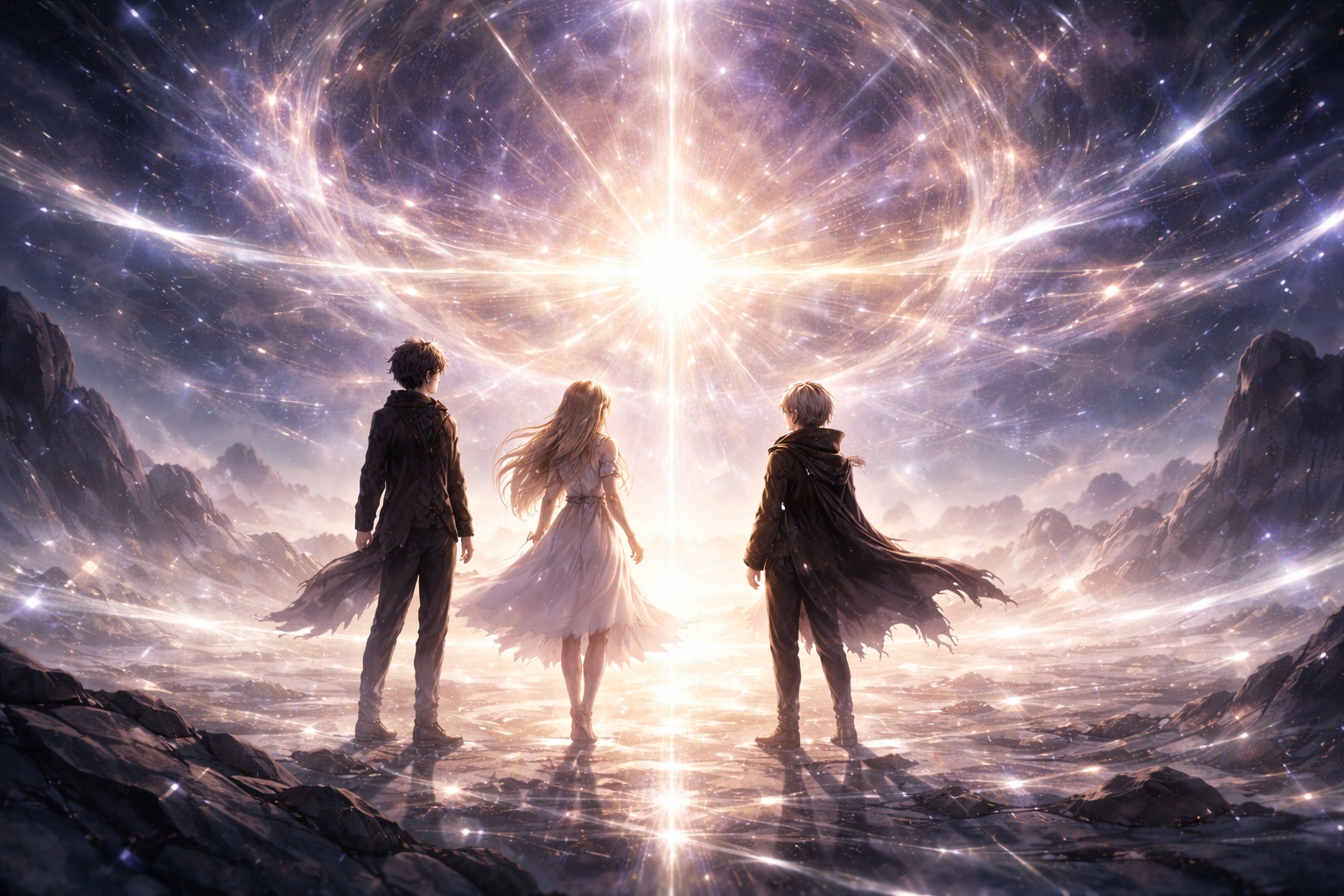
The sky above fractured in silence, light bending as two realities collided for the same existence. For a single, blinding moment, both persisted—then one gave way. The city dimmed, its colors draining, its people dissolving not into dust, but into fragments of light that rose slowly, returning to the lattice from which they had come.
Lyr’s voice cut through the collapse, steady but urgent. “We have to leave.”
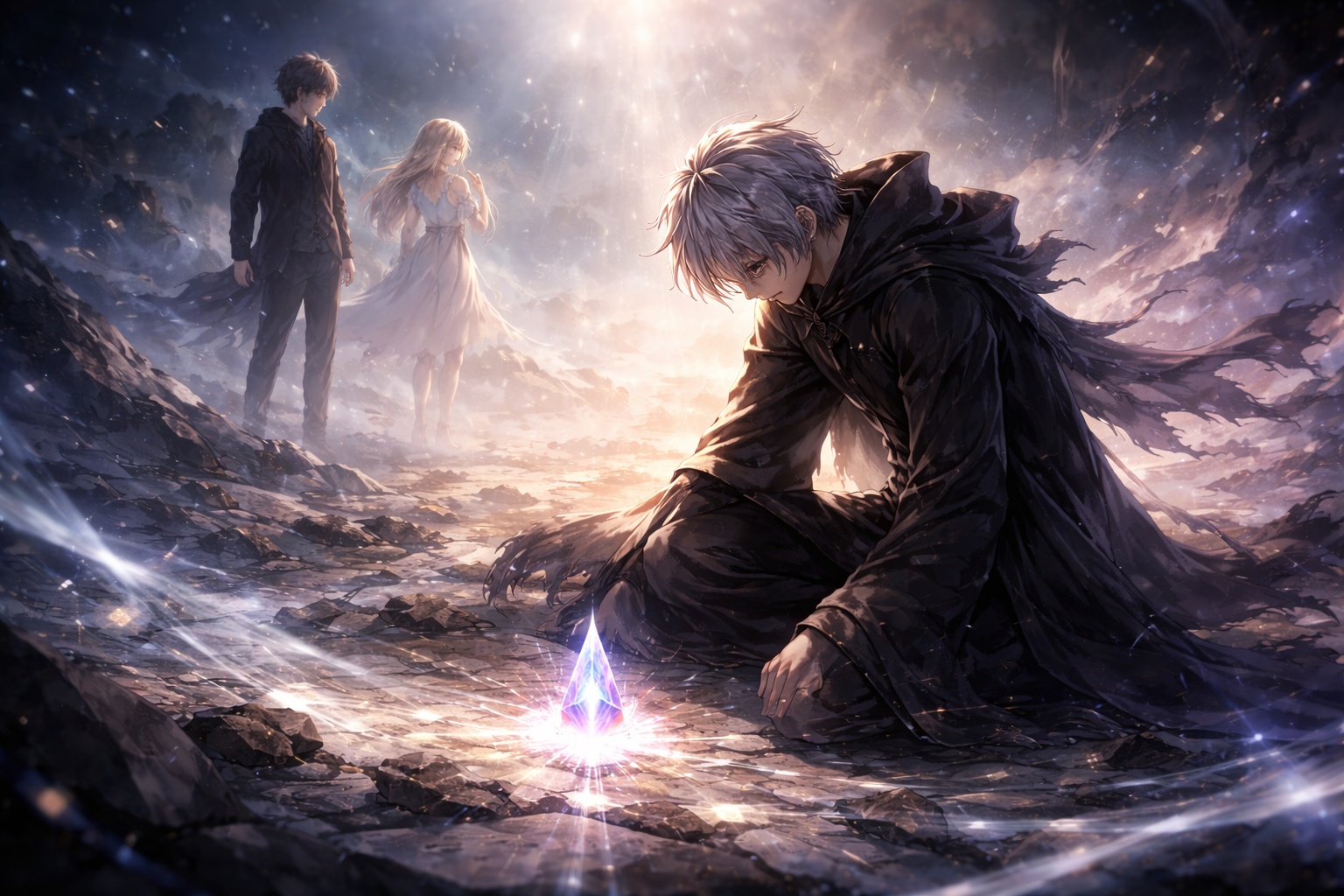
Rhelon hesitated, his gaze fixed on the boy—on the version of himself that had never known the warmth, the pain, or the memory of Elias. A life that had existed fully within its own truth, and yet would now vanish without anyone left to remember it.
Then the thread above snapped.
Light surged.
The city unraveled completely.
And as Rhelon was pulled back into the vast network of realities, he understood something that no Custodian, no system, no fragment had ever truly explained.
In a universe built from memory—
nothing was guaranteed to remain.
Not even the lives that once felt most real.